In the morning, while it was still very dark, Jesus got up and went out to a deserted place, and there he prayed. Mark 1:35
This passage (Mark 1:29-39) is notable as one of only three occasions that Mark reports Jesus at prayer. It underscores the importance of solitude to Jesus after an unusually busy day. By Jesus’ willingness to move on, leaving this place of prayer as well as rejecting pleas from the people of Capernaum that he stay with them, the story highlights the larger dimensions of Jesus’ mission. And it raises important questions for us – –
* What is our need for solitude?
* What is our desire to spend time alone in the presence of God?
* Where are the deserted places available to us?
A variety of answers are suggested by art and photography.
First, an abstract depiction of the healing of Peter’s mother-in-law by French painter Bertrand Bahuet.

Why should a sick room always be depicted as dark, bleak, and defeated? I appreciate the different feeling created by the use of color and the hint of smiles on the faces.
This image of Jesus praying at sunrise also uses color to convey its message: the burden of praying for others may be heavy, but the power of the Creator of heaven and earth is greater. As the sun rises, Jesus grows into a greater faith, not in his own power to heal or do good, but in the compassionate presence of God.

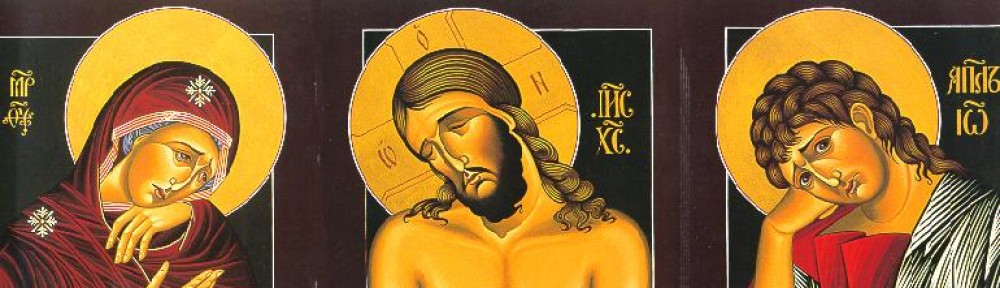
Yet even Jesus could not always remain steadfast and free of discouragement. He knew the depth and dimension of human suffering. It weighed upon him as he internalized more and more of the world’s brokenness.

For centuries the chief way of following Jesus’ example of prayer and solitude was to join a monastic order. When civil customs and authorities began to make alliance with the mainstream church, many people found themselves spiritually starving. At first individually, then collectively, they opted out of what seemed to be a compromised church and lived in “the lonely places of the world” – in the desert,on the mountains, beside the oceans – wherever sufficient solitude could be found. Many men and women became hermits; others lived in community. This picture of a monastery/ hermitage in Kosovo illustrates well the experience of solitude.

When did you most feel comfortable being alone?
How have you resisted or avoided being alone?
Solitude gives time to God that is not in competition with social contact, noise or stimulation. It is freedom from the need to be occupied or productive. It requires quieting the internal noise so we can better listen to God.
Practice: In a place where you cannot be interrupted, intentionally place yourself in the presence of God for 15 or more minutes. Inhale God’s breath of life; exhale all that weighs on you. Simply be alone with God. When it is time to return to others, leave the solitude gently.